Gary Indiana power outage leaves residents without electricity for nearly two weeks. Learn what happened and the key survival preparedness lessons. For thousands of residents in Gary, Indiana, a power outage became far more than an inconvenience. After a powerful derecho tore through Northwest Indiana on August 11, 2026, some Gary residents spent nearly two weeks without electricity.
As of August 25, power restoration is finally nearing completion. But what happened in Gary provides a real-world example of something the preparedness community has warned about for years: The grid does not have to go down nationwide to completely disrupt your life.
A severe storm, damaged infrastructure, and a prolonged restoration effort can turn an ordinary neighborhood into an environment where refrigeration, air conditioning, communications, lighting, and even access to food become difficult almost overnight. That makes the Gary, Indiana power outage worth examining through the lens of survival and emergency preparedness.
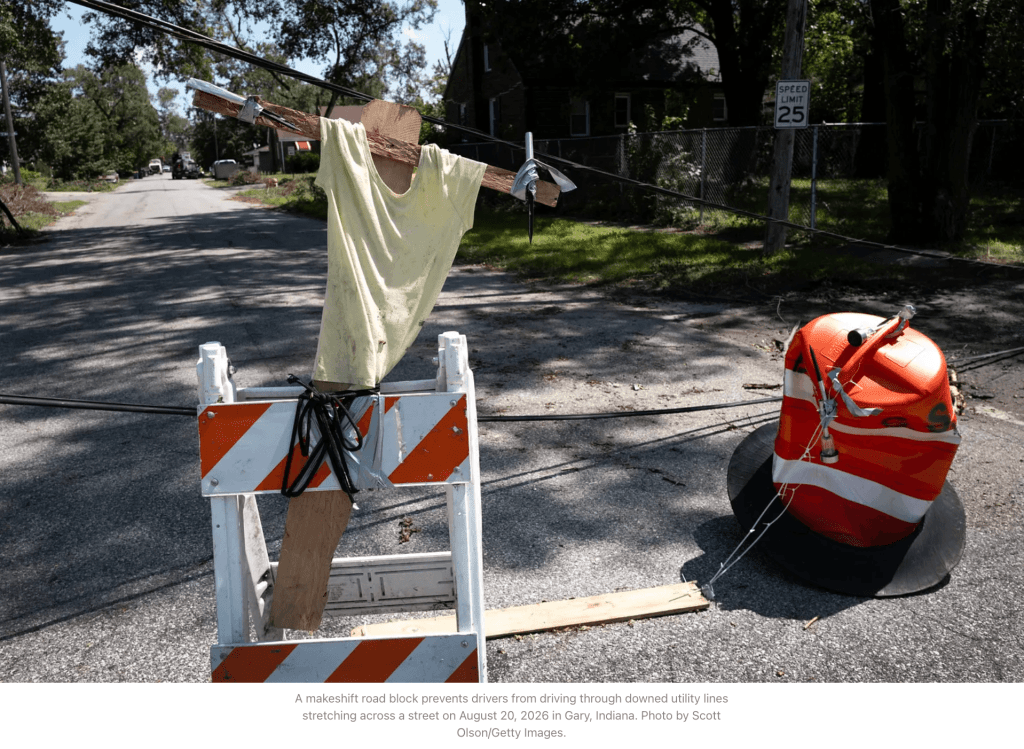
What Caused the Gary, Indiana Power Outage?
The outage began with an extremely powerful storm system that moved through the region on August 11, 2026. The National Weather Service classified the storm as a derecho, a large, fast-moving system that can produce widespread, destructive straight-line winds.
Those winds reached extraordinary speeds. The National Weather Service recorded a 99 mph wind gust at Gary/Chicago International Airport, while widespread areas of northern Illinois and Northwest Indiana experienced winds of roughly 70 mph to more than 100 mph.
The storm uprooted trees, damaged utility infrastructure, and brought down power lines throughout the region. NIPSCO reported that the August 11 storm and severe weather that followed ultimately affected approximately 374,500 customers across its service territory. Gary was among the hardest-hit communities.
Restoration required far more than resetting breakers or replacing a handful of transformers. Associated Press reporting indicated that roughly 300 utility poles and 44 transmission poles needed repair or replacement in Gary after the storm.
In other words, portions of the electrical system essentially had to be rebuilt.
Thousands of Gary, Indiana Residents Spent Nearly Two Weeks Without Power
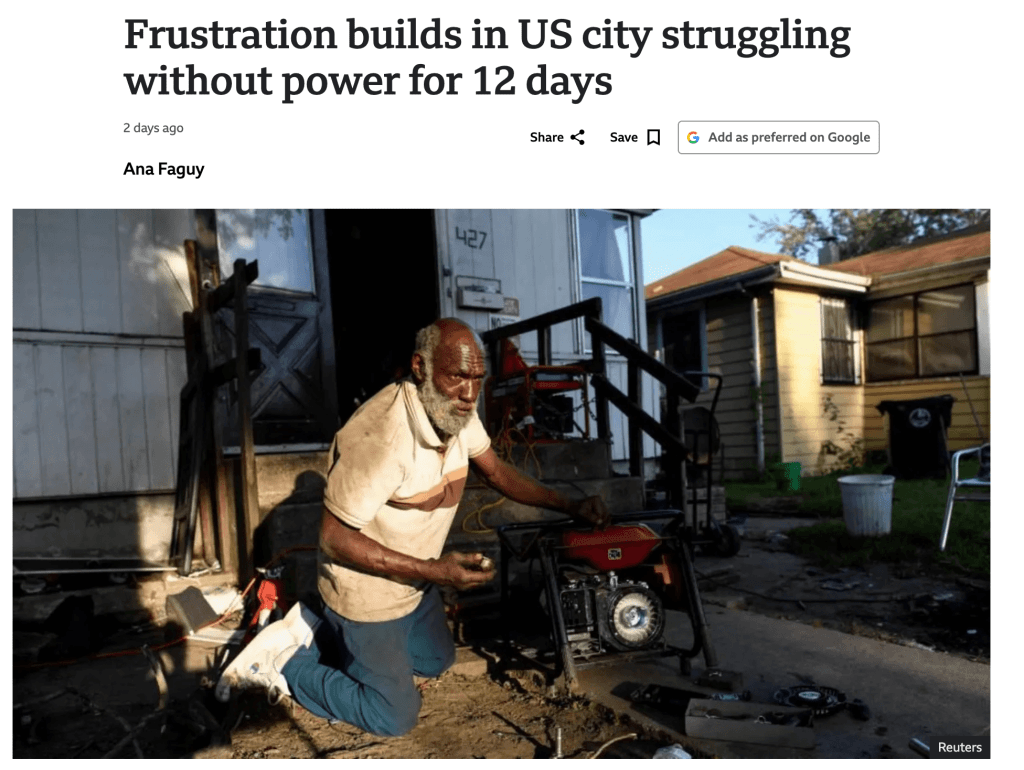
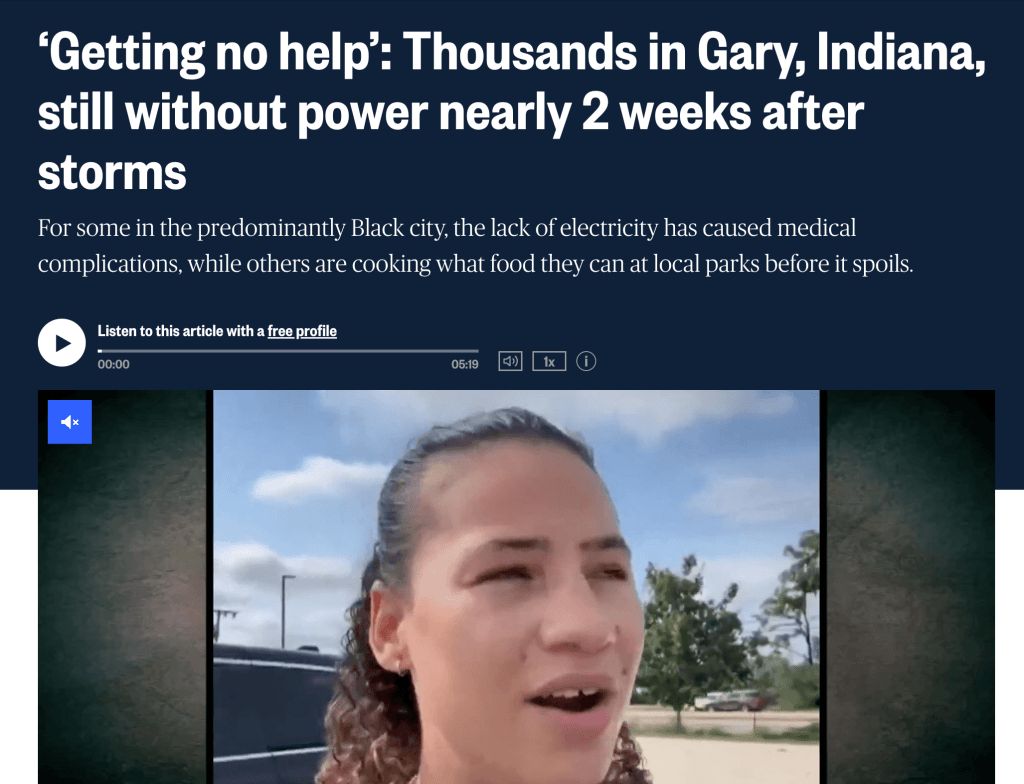
The scale of the outage becomes even more significant when you look at the timeline. The storm struck on August 11. NIPSCO’s estimated substantial restoration date for Gary was 11:59 p.m. on August 25, approximately two weeks later. At one point, more than 20,000 customers in Gary alone remained without electricity more than a week after the storm.
By the morning of August 25, the situation had improved dramatically, but thousands of customers were still without power as crews continued working throughout Gary. NIPSCO has also cautioned that community restoration estimates do not necessarily mean every individual property will immediately regain service. Localized damage and repairs required on private property can cause individual outages to continue longer.
The Outage Became More Than an Electricity Problem
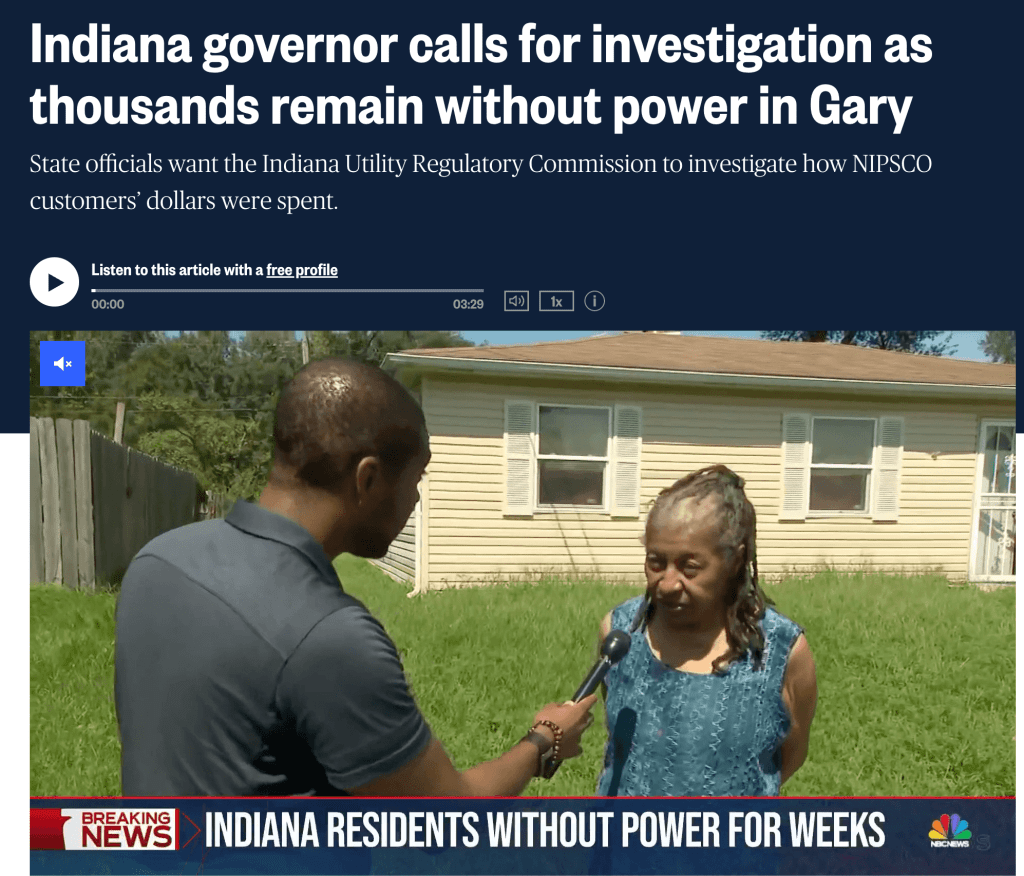
One of Gary’s biggest lessons is that a prolonged blackout quickly creates secondary problems. Electricity is not an isolated utility. Modern communities depend on it to support almost everything else. Residents reported losing refrigerated food, struggling to obtain ice, relying on generators, searching for places to charge phones, and dealing with homes without air conditioning during August.
Other infrastructure problems emerged as well, including boil-water advisories, darkened streets, water problems, and isolated sewage backups.
A prolonged power outage can eventually affect:
- Refrigeration
- Food storage
- Drinking water
- Sanitation
- Air conditioning and heating
- Medical equipment
- Communications
- Internet access
- Gas stations
- Traffic signals
- Street lighting
- Businesses
- Schools
- Banking and electronic payments
- Personal security
The longer electricity remains unavailable, the more these problems stack on top of one another.
Survival Lesson #1: Prepare for Days, Not Hours
Most people have experienced a short power outage. The lights go out, you grab a flashlight, and a few hours later everything comes back on. That experience can create a dangerous assumption that future outages will work the same way. Gary demonstrates why emergency planning should account for a much longer disruption.
Imagine the difference between preparing for six hours without electricity and preparing for seven days.
Food becomes a problem. Water can become a problem. Fuel becomes a problem. Batteries run down. Phones die. Portable power stations eventually run out. Generators consume fuel. Stores may be closed or overwhelmed.
What starts as an inconvenience can quickly become a logistics problem.
A good preparedness plan should therefore be built around layers of redundancy, rather than assuming utility service will return quickly.
Survival Lesson #2: A Generator Is Not a Complete Power Plan
Generators have played an important role in helping people through the Gary outage.
But they also revealed one of their biggest weaknesses:
Generators require fuel.
One Northwest Indiana resident interviewed during the outage reported spending approximately $75 per day on gasoline to keep a generator operating.
Over seven days, that is more than $500. Over two weeks, it can exceed $1,000.
And that assumes fuel remains readily available.
A more resilient emergency power strategy combines multiple options:
- Generator
- Safely stored fuel
- Portable power station
- Solar charging
- Battery banks
The generator can handle large electrical loads. A portable power station can quietly run smaller devices when a generator isn’t needed. Solar panels provide a way to generate at least some electricity without consuming stored fuel, while power banks keep phones and small electronics functioning.
No single solution is perfect.
The goal is redundancy.
Survival Lesson #3: Food Disappears Faster Than You Think
One of the most immediate consequences of an extended blackout is food loss.
Refrigerators and freezers only buy you limited time once electricity disappears.
After that, families must either eat quickly, find another way to keep it cold, or throw it away.
Gary residents reported significant food losses during the outage, while relief organizations and community centers distributed meals and groceries throughout the affected area.
That is why every household should keep food that doesn’t require refrigeration.
A practical emergency pantry might contain:
- Canned meats
- Canned vegetables
- Soups
- Rice
- Pasta
- Peanut butter
- Protein bars
- Shelf-stable milk
- Freeze-dried meals
- Dehydrated foods
- Ready-to-eat meals
- Long-term food storage
Ideally, households should be able to feed themselves for at least several days without refrigeration or a functioning grocery store.
Survival Lesson #4: Water Preparedness Is Just as Important as Food
People often associate power outages with flashlights and generators.
Water gets overlooked.
But municipal water systems depend on pumps, treatment facilities, lift stations, and other infrastructure that may themselves require electricity.
Gary residents experienced water-related complications during the outage, including boil advisories in some areas.
That makes stored water one of the simplest and most valuable emergency supplies.
But stored water should only be the first layer.
A stronger water preparedness plan includes:
- Stored drinking water
- Portable water filtration
- Water purification tablets or treatment methods
- A reliable way to boil water
If one method fails, another remains available.
Survival Lesson #5: Your Refrigerator May Not Be the Most Important Thing to Power
When people buy generators, they often immediately think about keeping the refrigerator running.
That makes sense, but during a serious outage you need to prioritize electrical loads.
Depending on the household, critical loads might include:
- Medical equipment
- Refrigeration for medications
- Communications
- Emergency lighting
- Refrigerator or freezer
- Fans or limited climate control
- Other essential household electronics
One resident affected by the Northwest Indiana outage described driving elsewhere to obtain ice specifically to protect insulin from spoiling.
That is a reminder that emergency power planning should begin by asking:
What absolutely cannot lose power in my home?
Build your backup power system around those items first.
Survival Lesson #6: Communications Become Critical
Your smartphone becomes one of your most valuable survival tools during a disaster.
It can provide:
- Emergency alerts
- Weather information
- Utility restoration updates
- Maps
- Communication with family
- Access to emergency services
- News
- Flashlight capability
- Access to financial accounts
But a smartphone with a dead battery is basically a very expensive piece of glass.
Every household should have multiple ways to recharge phones, including portable battery banks, vehicle chargers, portable power stations, solar chargers, or generators.
An emergency radio is also valuable because cellular service and internet access should not be your only sources of information.
Survival Lesson #7: Darkness Changes the Security Environment
A neighborhood feels very different when streetlights, porch lights, businesses, and traffic signals suddenly go dark.
Some Gary residents reported concerns about crime and personal security during the outage, with residents staying awake late into the night because neighborhoods lacked normal lighting.
Preparedness is not only about food and water.
It is also about maintaining awareness of your surroundings.
Useful backup lighting options include:
- Motion-activated lights
- Rechargeable lanterns
- Solar-powered exterior lighting
- Headlamps
- Reliable handheld flashlights
Households should also think through how they would secure their property if exterior lighting, cameras, alarms, or other security systems stopped functioning.
Survival Lesson #8: Community Is a Survival Resource
One of the most encouraging parts of the Gary story has been the community response.
Churches, volunteers, nonprofits, and city organizations distributed food, supplies, and hot meals while providing residents places to charge electronics and access other resources.
That highlights something sometimes forgotten in discussions about preparedness:
You do not have to survive alone.
Knowing your neighbors matters.
Knowing who is elderly, disabled, or medically vulnerable matters.
Knowing who has a chainsaw, generator, truck, tools, medical training, or useful equipment can matter when normal infrastructure fails.
Strong communities are more resilient because people can combine resources and skills.
Sometimes the most useful survival tool is not something sitting in your garage.
It is the person living next door.
How Long Could You Actually Handle a Power Outage?
Gary gives us an opportunity to ask a useful question.
Forget a hypothetical nationwide grid collapse. Forget the apocalypse.
Imagine a severe storm hits your town tonight.
Your electricity will not return tomorrow. Or the next day.
You are told restoration could take one week.
Could your household function?
- Do you have enough drinking water?
- Can you prepare meals without electricity?
- Can you keep food from spoiling?
- Can you recharge your phone?
- Can you receive emergency information?
- Can you safely illuminate your home at night?
- Can you stay warm in winter or manage extreme heat in summer?
- Can you operate essential medical devices?
- Can you safely store enough generator fuel?
- Can you function if nearby stores are closed?
Those questions expose weaknesses in a preparedness plan much faster than thinking only about extreme doomsday scenarios.
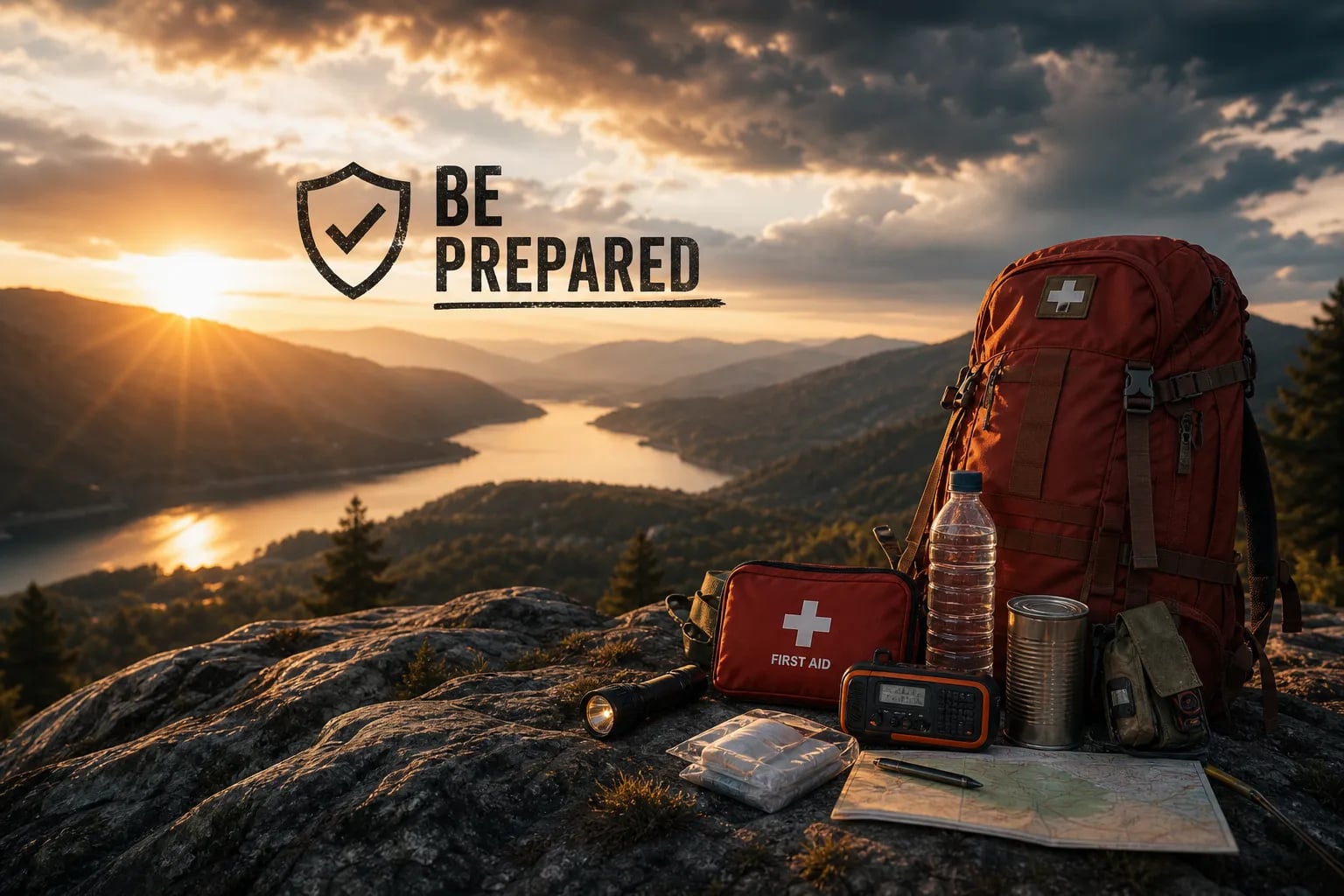
Basic Power Outage Preparedness Kit
You do not need to spend thousands of dollars overnight.
Start with the essentials and build your preparedness gradually.
A practical power outage preparedness kit should include:
- Multiple flashlights
- Headlamps
- Spare batteries
- Rechargeable lanterns
- Phone power banks
- Battery or hand-crank emergency radio
- Stored drinking water
- Water filtration or purification equipment
- Shelf-stable food
- Manual can opener
- Basic first-aid supplies
- Necessary medications
- Hygiene and sanitation supplies
- Cash in small denominations
- Fire extinguisher
- Backup cooking method rated for its intended environment
- Portable power station
- Generator and safely stored fuel, if appropriate
- Heavy-duty extension cords rated for the intended load
- Solar charging equipment
- Copies of important emergency information
You do not necessarily need everything immediately.
The objective is to eliminate single points of failure.
The Gary Outage Is Also Raising Questions About Infrastructure
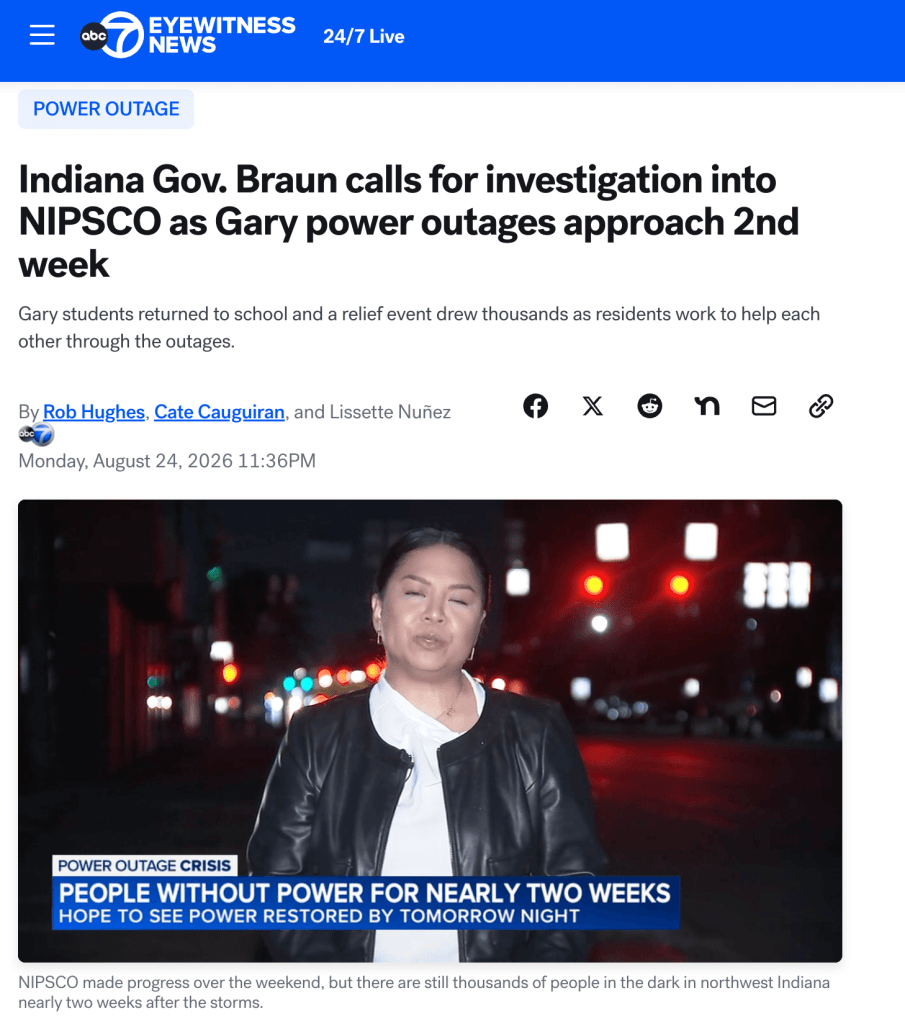
The outage’s duration has raised questions beyond the storm itself. Indiana Governor Mike Braun directed the state’s utility consumer advocate to seek a formal investigation into NIPSCO’s preparation and response.
Officials want investigators to examine the utility’s vegetation management, rights-of-way maintenance, and how funding intended for infrastructure and reliability improvements was used. NIPSCO has said it will cooperate with any investigation and maintains that the August 11 storm caused extensive damage to both its transmission and distribution systems. Regardless of what investigators eventually determine, there is a preparedness lesson here that applies everywhere:
Critical infrastructure can fail.
It does not matter whether that failure comes from extreme weather, equipment damage, aging infrastructure, human error, or some combination of factors.
Individual preparedness starts with accepting that possibility.
Emergency Assistance for Indiana Residents
Recovery will continue long after electricity is restored. The Indiana Department of Homeland Security established an August 2026 Disaster Resource Hub with information about available assistance. Indiana has also opened its State Disaster Relief Fund, which can provide qualifying Hoosiers with up to $5,000 in emergency assistance for certain disaster-related needs. Indiana 211 can also connect affected residents with housing, food, shelter, and other community resources. The state extended the deadline for eligible SNAP recipients affected by the August 11 disaster to request replacement benefits for food lost because of storm damage or power outages through August 31, 2026.
Preparedness Is Insurance Against Disruption
The Gary power outage matters because it makes preparedness real. This wasn’t an EMP, this wasn’t a cyberattack, this was Mother Nature and one extraordinarily powerful storm. Within hours, hundreds of thousands of people lost electricity. For some families, that outage lasted nearly two weeks (and it is still ongoing at the time of this article).
People lost refrigerated food. Generators consumed hundreds of dollars of fuel. Residents searched for ice, food, charging stations, and other basic resources. Community organizations began providing meals. Utility crews worked to rebuild damaged electrical infrastructure.
And suddenly, things most of us rarely think about became extremely important:
Water. Food. Fuel. Power. Light. Communication. Security. Community.
That is what preparedness is really about.
Not predicting exactly what disaster will happen next.
It is building enough redundancy into your life that when something you depend on suddenly disappears, you still have options.
Because the question is not whether the power grid can go down.
Gary just showed us that it can.
The better question is: How long could you handle it if it happened where you live?
Sources
- August 11, 2026 Derecho — National Weather Service Chicago
- Tens of Thousands in Indiana Still Without Power a Week After Deadly Storms — Associated Press
- Indiana Residents Endure a Ninth Day Without Power — Associated Press
- Gary Homes and Businesses Still Without Power Nearly Two Weeks After Storms — Associated Press
- Executive Order 26-21: Statewide Disaster Emergency Declaration — State of Indiana
- August 2026 Disaster Response Status Update — Indiana Department of Homeland Security